The Incredible Fantastic Four
Quality in the Face of Quantumania
The following was written with human interlligence only. No Gen AI was used whatsoever.
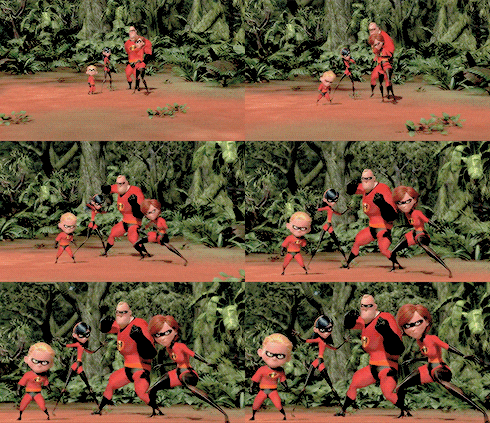
I doubt I’ll ever see a superhero movie of higher quality than Disney-Pixar’s The Incredibles (2004).
But what is high quality?
Clear characters changing as they press through meaningful, coherent and comingled internal and external conflicts—which are ultimately resolved such that the life experience of the characters would reasonably be divided into categories of “pre- and prior” thereafter.
There’s more of course: The precision of storytelling, the generous dosage of humor and heart, the deliberate and methodical accruing of tension and ratcheting of stakes, and the clarity of the spectacle when it does strike.
And, most critically, the clear, convincing and dynamic relationships between these complete and well-drawn characters.
In short, the enaction of a sophisticated drama.
The Incredibles, very notably, exudes its influences plainly and playfully. Marvel Comics’ The Fantastic Four is the spring from which this cartoon-epic flows. That adoption is not limited to the characters’ powers (invisibility, telekinesis, elasticity, super-strength, and combustion), the nature of their relationships, or the structure of their conflicts.
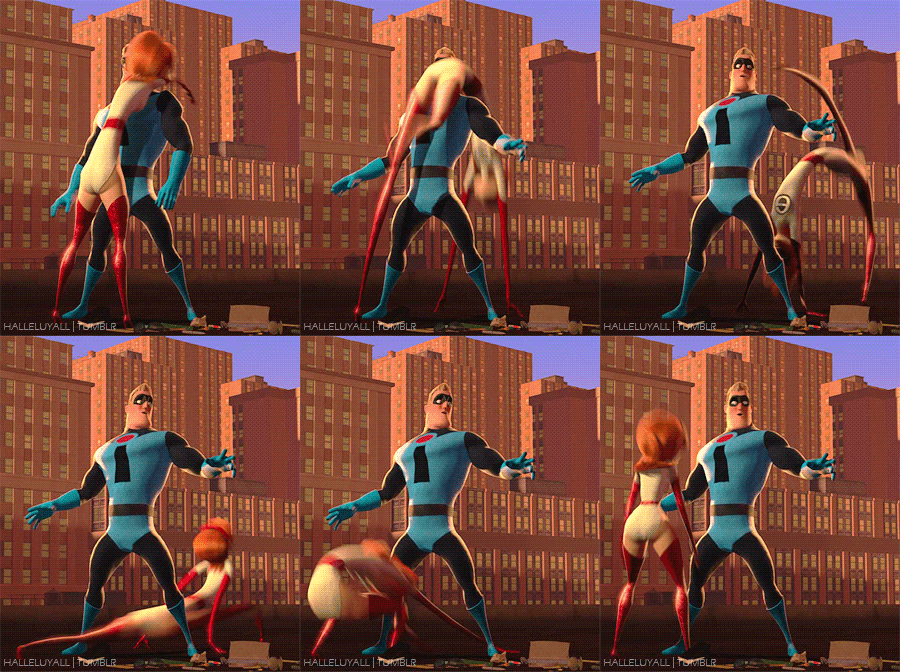
The Incredibles weaves together the visual and sonic codes of the cracked but optimisitc American post-war pop culture vividly scrawled throughout the 1960s Lee-Kirby Marvel books, most especially The Fantastic Four. That positive impulsion drives the jazzy score composed by Michael Giacchino. The bright art-deco design language and color scheme fill and inform every shape.
The characters—before The Fall of the Superheroes—project the confidence of a people that know they can leap to the Moon because they’ve just proved it to themselves, the world and history. It’s all a loving look back at a moment that looked forward.
It’s beautiful, smart, fantastic.
The Fantastic Four: First Steps (2025) can’t compete. How could it? That juice has been drunk.
How do you re-ignite a franchise that’s been pastiched beyond any levels of quality the original ever could have touched?
The answer, as always, begins with character.
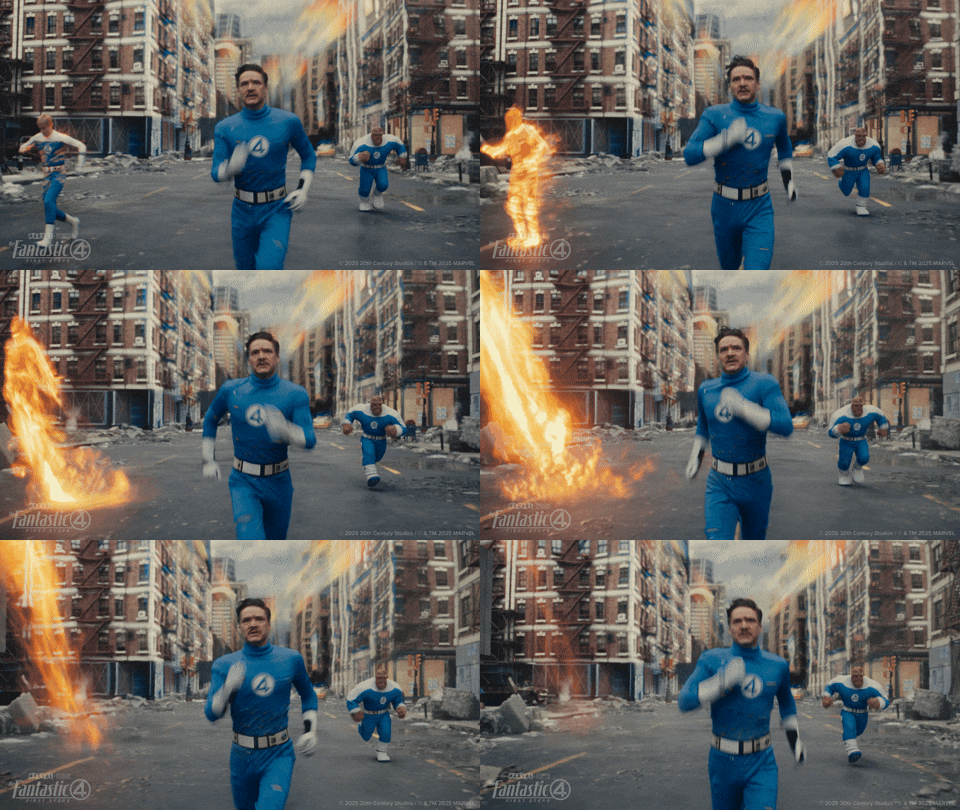
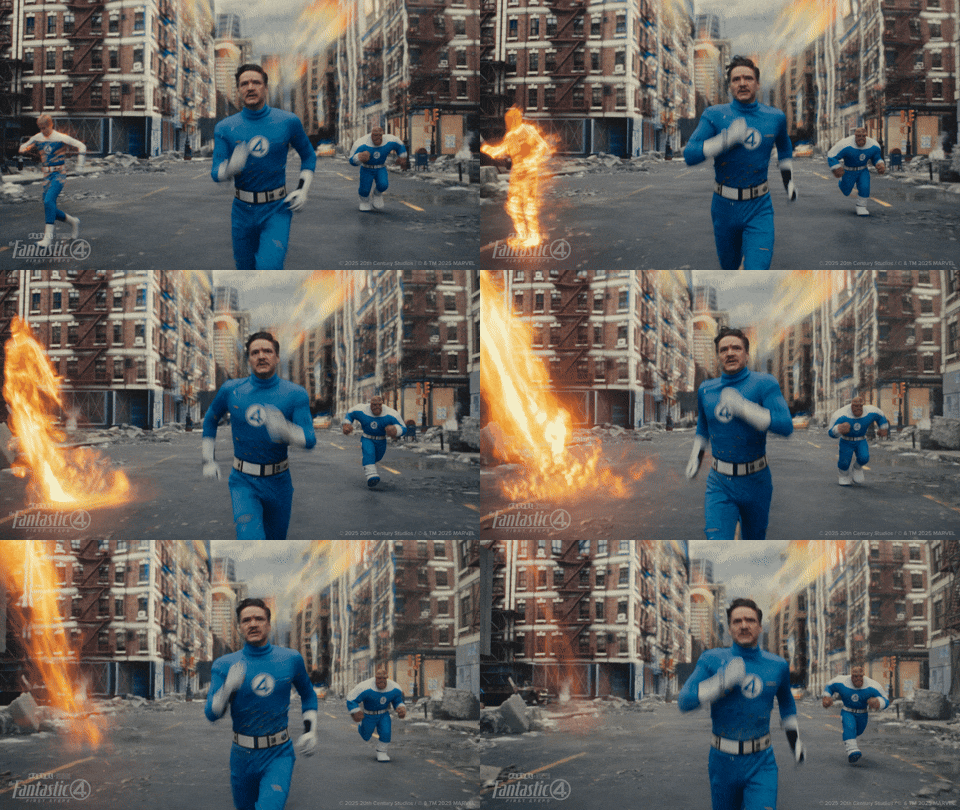
This new iteration of The Fantastic Four stands atop two pillars: character and world-building.
Reed, Sue, Ben and Johnny are a family first and foremost. But, as in The Incredibles, each of them are fully developed individuals with desires, conflicts and flaws. It doesn’t hurt that they are also each strikingly well-acted. (Vanessa Kirby does perhaps the best acting in a movie entirely void of any bad acting at all.)
Ben’s story is a secret weapon. He smuggles in an extra and effective quotient of heart beneth his visually-stunning armor. (Michael Chiklis did great work with the role as well.) This Thing’s design and execution isn’t really believable, but it is fitting and so pleasing to behold.

Into what does his look fit so well?
The world enacted here. A title card tells us this is World 828. I assume this means it is not the same Planet Earth and timeline of, say, Iron Man (2008) or Captain America: The First Avenger (2011).
And what a beautiful World 828 it is. This moment is a retro-futuristic mashup entirely unafraid to be explicitly goofy. An early montage tells us that The Fantastic Four have recently defeated “Red Ghost and his army of super apes” (or something like that). We get glimpses of silly kaiju and several appearnaces from The Mole-Man (he doesn’t get a ton of screentime, but more than his counterpart The Underminer did in The Incredibles or its sequel).
First Steps nearly completely oversteps the requirements of an origin story. The focus stays with these characters during this particular crisis. We see character (theirs and their world’s) illustrated vividly and urgently. Those are its material strengths.
While the rest (the villain, the plot, a moment of shaky dialouge here and there) may not be for the ages, its character and world are crafted wiht enough care, love, enthusiasm and artisty to satisfy the promise of the title.