How’s Your Soft Apocalypse Going?
A Hopeful Note from a Delirious Parent
“HyperNormalisation” is a word that was coined by a brilliant Russian historian who was writing about what it was like to live in the last years of the Soviet Union. […] in the 80s everyone from the top to the bottom of Soviet society knew that it wasn’t working, knew that it was corrupt, knew that the bosses were looting the system, knew that the politicians had no alternative vision.” –Adam Curtis, AdBusters.
I’ve lost track of the number of times I’ve had Covid. Is that a bad thing? I think it’s three, my wife believes four, neither of us is certain.
Either way, it feels like a lot, and I’m not unconcerned about the volume of virus I’ve accumulated over the past five years.
After a recent family wedding, I tested positive again. As of today’s unanticipated, spontaneous (and stellar) nap, I believe I’m now on the upswing.
My first case was nothing (Jessie Pinkman voice: “Go vaccines! Yeah, Science!”). The second round was rougher: It felt as if my head and body had been ejected from dual airlocks.
This bout wasn’t nothing. I’d call it flu-level.
If it were just me (41, several times vaccinated, otherwise healthy), I’d shrug it off—I kind of am shrugging it off—but I have a wife and small kids. They’ve all tested positive too.
We were the most Covid-conscious people in our family/friend group in 2020. Still, the virus finds us. All of this has happened before and all of this will happen again.
If my kids ever read this in the future (sorry about all the cringe I’ve left in my wake—was just being me), understand that your early encounters with the coronavirus were exclusively your fault.
You had, simply, the worst timing.
Our son was born in 2019. Our daughter in ’21. Our second daughter in late ’24. They all arrived in a particularly active moment in a particularly active timeline.
Doctors say the same thing now: treat it like the flu. Drink water, take zinc, rest. Meh.
The mehness of it all is striking.
Yesterday I stood in my garage trying to find the right football to inflate to throw with my son in lieu of the football team practice he would miss that day due to our illnesses.
The two big kids caught me and decided to hold an unrelated and hostile argument at my feet. It elevated into a screaming match while I was up to my elbows in loose cables, sports equipment and plastic toys we’ll never use again but can’t bring ourselves to eject from our garage for some reason.
My congestion was severe, headache acute, environmental volume loud and increasing. I could feel—and almost see—the glaring white walls of annihilation, pain, annoyance and paralysis pressing against the sides of my skull like a vice.
If I could have taken off my own head and booted it like a kickball over my neighbors’ fence, I’d have done so, instantly, with neither thought nor regret.
This moment’s issue is bigger than Covid and parental overwhelm, of course.
On a recent episode of Chris Hardwick’s new podcast, I Think You’re Overthinking It, he used the term “soft apocalypse” to describe this mini-era of our tech-news-and-anxiety-soaked lives. That term resonates with me.
Civilization has not fallen. But you could be forgiven for thinking it will happen in your lifetime. Or even in this decade.
The National Guard and masked ICE agents will soon, allegedly, march the streets of Chicago (my city). The US President is an open monster. Mad men wield nuclear arsenals. The villains are in control of everything but themselves.
There was a time when I was more politically active. These days, with three small kids, I’ve had to pull away. Since the last election I’ve insulated myself—not because I can’t handle reality, but because reality dictates that I handle the lives (three of them frighteningly young) in my direct charge.
Distance is a luxury. I have my work (others don’t). My home (others don’t). My family and friends (others don’t).
I am not trapped and dying of starvation. I am not at risk of deportation. My family and I are about as immured from the global madness as anyone short one New Zealand fallout bunker could be.
What am I experiencing then? Outrage and depression. Extreme sympathy and extreme revulsion at (what I perceive to be) my inability to do anything meaningful. Anger. Lassitude. Dull and resonant grief.
My household will recover from this latest Covid wave. My work and life overwhelm will recede. The test is not survival—I know I’ll survive. The test is whether I emerge tired and disorganized, or stronger and ready to re-engage.
I want to engage. I want to resist the hell the coward authoritarians push. I don’t know how to fight genocide. I don’t know how to rebuild a functioning opposition. But I do know a bit about strategy, messaging, and character.
So what then? What do I do?
This article from The Guardian answers the question well:
What makes dysfunction so dangerous is that we might simply learn to live with it. But understanding hypernormalization gives us language – and permission – to recognize when systems are failing, and clarifies the risk of not taking action when we can.
In 2014, Ursula Le Guin accepted the National Book Foundation’s Medal for Distinguished Contribution to American Letters, saying: “We live in capitalism. Its power seems inescapable. So did the divine right of kings. Any human power can be resisted and changed by human beings. Resistance and change often begin in art, and very often in our art, the art of words.”
[Digital anthropologist Rahaf] Harfoush reflects on this quote often. It underscores the fact that “this world we’ve created is ultimately a choice”, she says. “It doesn’t have to be like this.”
We have the research, technologies and wisdom to create better, more sustainable systems.
“But meaningful change requires collective awakening and decisive action,” says Harfoush. “And we need to start now.”
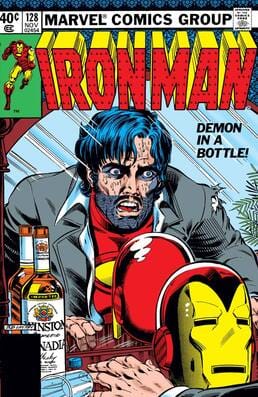
In the weeks and months after I first got sober, one of the first changes I noticed in my life was how fucking good it felt to wake up in the morning.
For the first time in—I don’t know—years, I awoke daily with presence of mind and physical energy.
I woke up at Zero, not below it. I didn’t need to fight through pain and fog just to reach my baseline.
I am reconciled to the fact that the moment of my life right now is unique. I will not always have children these ages.
I will not always have the unique perma-mess on my hands known to outnumbered parents.
I will not always have a block of (somehow) 900-hour chaos between 5 and 8 PM every night.
I am reconciled to the fact that right now I simply do have to fight my way to zero.
I have been hyper-normalized to this.
It will not always be so. And, I’m told by well-meaning and experienced people, that someday, I will miss these days. I believe them.
So, in a way, I’ve been here before.
The protocol is the same.
Fight to zero. And through it.